Henan Tianzhong Vibration Equipment Co.Ltd
News Details
Boosting Efficiency: Ultrasonic Cleaning Systems for Vibrating Screens in Fine Chemical Applications
Boosting Efficiency: Ultrasonic Cleaning Systems for Vibrating Screens in Fine Chemical Applications
In the fine chemical industry, precision and efficiency are paramount. One of the most persistent challenges in material screening is screen blinding—the clogging of mesh apertures by fine, adhesive, or electrostatic powders. Traditional vibrating screens, while effective for many applications, often struggle with these materials, leading to reduced throughput, inaccurate particle separation, and frequent downtime for manual cleaning.
Enter ultrasonic cleaning systems—a transformative technology that significantly enhances the performance and reliability of vibrating screens in demanding fine chemical processes.
How Ultrasonic Cleaning Systems Work
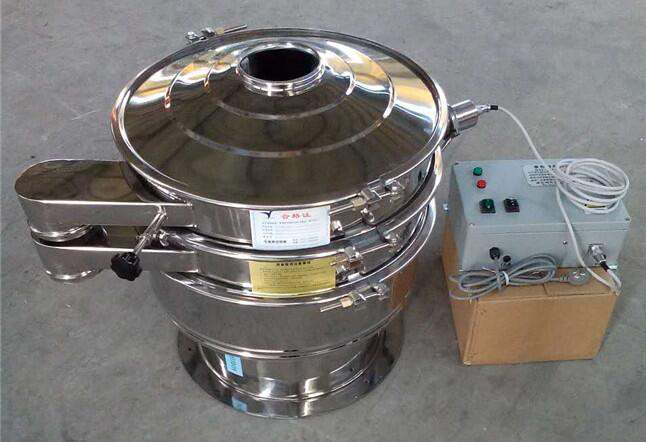
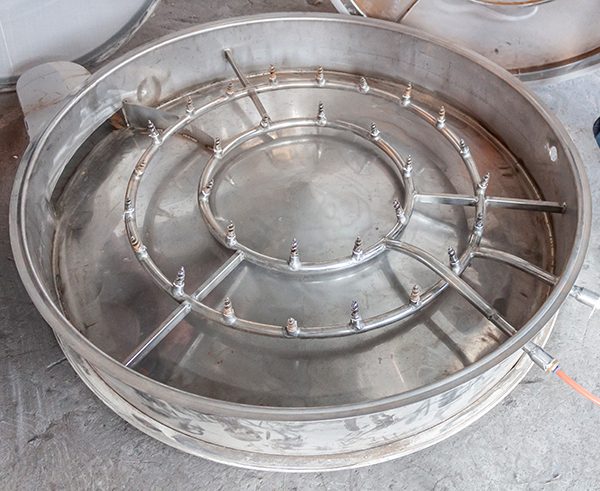
An ultrasonic cleaning system for vibrating screens, often called an ultrasonic deblinding system, consists of a high-frequency ultrasonic generator, a transducer, and a resonance ring attached to the screen mesh. The generator converts electrical energy into high-frequency (typically 20kHz to 40kHz) mechanical vibrations. These vibrations are transmitted via the transducer to the resonance ring, which creates microscopic, high-frequency oscillations across the entire screen mesh.
This ultrasonic energy effectively disperses particles that adhere to the screen wires due to surface tension, static charge, or viscosity. It prevents agglomeration and keeps the apertures clear, allowing particles of the correct size to pass through freely.
Key Benefits for Fine Chemical Screening
Prevention of Screen Blinding: The core advantage. Ultrasonic waves break the friction and adhesion between powder particles and the screen mesh, virtually eliminating clogging. This is crucial for screening fine chemicals, pharmaceuticals, metal powders, pigments, and other cohesive materials.
Improved Screening Accuracy and Quality: With open apertures, the screening process achieves near-perfect separation. Oversized particles are correctly rejected, and undersized materials pass through efficiently, resulting in a higher-quality product with a tighter particle size distribution.
Significant Increase in Throughput: By maintaining a clean screen, the effective screening area is maximized. This allows for higher feed rates and continuous operation without the decline in output associated with traditional screen blinding. Productivity can increase dramatically.
Extended Screen Life: Manual cleaning with brushes or compressed air can damage delicate screen meshes. Ultrasonic cleaning is a non-contact, gentle method that prevents physical abrasion, leading to longer screen life and reduced consumable costs.
Reduced Downtime and Labor Costs: The need for frequent shutdowns to clean or change screens is minimized. This enables longer production runs, lowers operational costs, and allows labor to be allocated to more value-added tasks.
Enhanced Process Stability and Automation: Consistent screening performance is vital for automated production lines. Ultrasonic systems provide stable, predictable operation, contributing to overall process control and product consistency.
Application in Fine Chemical Processes
Fine chemical production often involves valuable, high-purity materials where contamination and yield loss are critical concerns. Ultrasonic-equipped vibrating screens are ideal for:
Active Pharmaceutical Ingredients (APIs): Ensuring precise granule size before tableting or encapsulation.
Specialty Chemicals and Catalysts: Screening sensitive powders where particle size directly impacts reaction efficacy.
Food-Grade Additives and Vitamins: Maintaining hygiene and precise specification in powder form.
Pigments and Dyes: Screening agglomerate-prone materials without color contamination.
High-Value Nano-materials and Battery Powders: Handling ultra-fine, electrostatic powders effectively.
Integration and Considerations
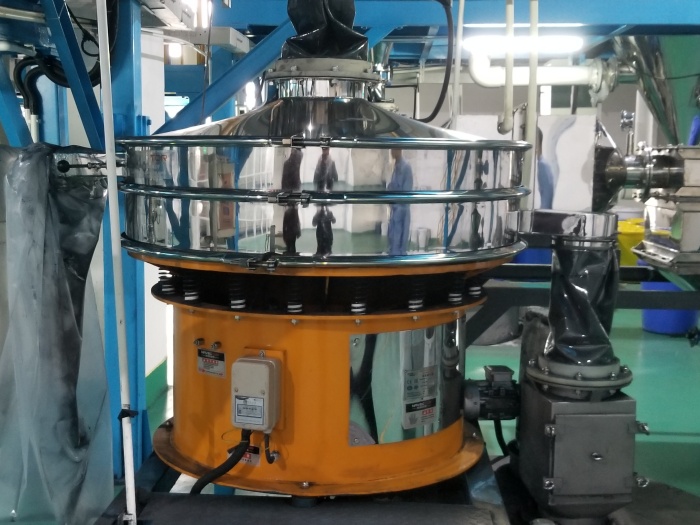
Modern ultrasonic systems are designed for easy retrofit onto existing circular, linear, or rectangular vibrating screens. Key selection factors include:
Choosing the correct ultrasonic power and frequency for the material and mesh fineness (finer meshes require higher frequency).
Ensuring compatibility with the screen frame material and industrial environment (explosion-proof options are available).
Integrating controls with the main screening equipment for automated operation.
Conclusion
The integration of an ultrasonic cleaning system represents a smart upgrade for fine chemical processors relying on vibrating screens. It directly addresses the industry’s core needs for precision, yield, and operational efficiency. By tackling the fundamental problem of screen blinding, this technology not only boosts screening performance but also contributes to a more reliable, automated, and cost-effective production line. Investing in ultrasonic deblinding is an investment in product quality, throughput, and long-term operational savings.
Related Posts
2026-01-30
Why use vacuum feeders for powder transportation?
In modern industrial production, especially in sectors like pharmaceuticals, food processing, and ch...
2026-01-14
How Does a Vacuum Conveyor Work?
Vacuum conveyors, also known as vacuum conveying systems or vacuum powder transfer systems, are esse...
Give us a email or Simply Complete the Form
Address:Xinxiang City, Henan Province, ChinaEmail:admin@hntzs.comWhatsApp:+86 18937322992Phone:+86 18937322992